
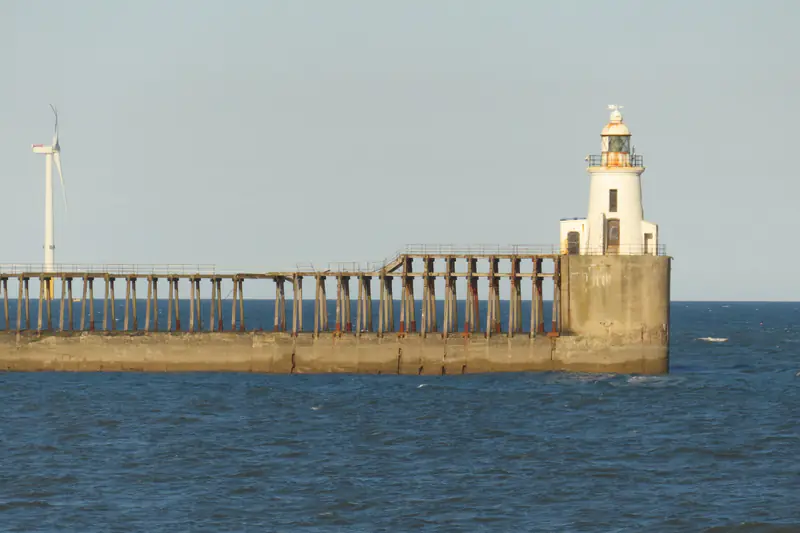
Renewable energy is hardly a new idea in Blyth. The Port of Blyth, the offshore renewables test facilities run by ORE Catapult and cable manufacturing across the river at Cambois have made the town part of what is promoted as the Energy Central cluster. Putting panels on a house in Newsham or a unit near the harbour is a much smaller project, but it calls for the same attention to exposure, materials and long-term access.
Solar Services Available Across Blyth
- Home solar panels. Survey, design, itemised quotation, installation and commissioning for houses across the town. Read more about domestic solar panel installation.
- Commercial solar PV. Arrays for workshops, warehouses, offices and port-side premises, sized around daytime electricity use. See commercial solar installations.
- Battery storage. Batteries supplied with a new system or retrofitted to existing panels, covered on the home and business battery storage page.
- Maintenance and repairs. Inspections, fault-finding and solar PV repairs, including systems installed by other companies, subject to inspection.
How the Coast Shapes Solar Installations in Blyth
Homes near the beach, the dunes and the estuary are exposed to strong winds and salt-laden air for much of the year. Neither rules out solar, but both change the specification.
Mounting systems and fixings
Rails, clamps and roof hooks need to resist corrosion in a marine atmosphere, and the fixing pattern is chosen to suit the wind exposure of the building. Panels are usually kept clear of ridges, verges and eaves, where wind uplift is strongest. On a roof facing the North Sea, cheaper fixings can prove a false economy.
Inverters, isolators and outdoor cabling
Any equipment mounted outside, including isolators, cable runs and some batteries, needs a suitable enclosure and a sheltered position where possible. Inside, the inverter is placed where it stays dry and ventilated and can be reached easily for checks.
Which Blyth Homes Suit Solar Panels?
Most houses with a reasonably clear roof slope facing anywhere from east through south to west are worth assessing. The town's housing falls into a few broad groups, and each brings its own practical questions.
Victorian and Edwardian terraces
Terraces around Cowpen and the town centre typically have a main slope front and back, chimney stacks to work around and limited space for scaffolding. Rear slopes facing south or west can carry a worthwhile array, and panels on the rear avoid altering the street view.
Inter-war and post-war estates
Semis and short terraces from the middle of the last century often have simple pitched or hipped roofs with good access. Hipped roofs reduce usable space, so an east and west split is sometimes the better layout.
Newer homes around South Beach
Newer estates generally have sound roof coverings and modern consumer units, which can simplify installation. Some already have a small array, in which case a battery or a health check may be the more useful upgrade.
Port, Industrial and Energy-Sector Premises
Businesses around the port and the town's industrial estates often have large roofs and steady daytime demand, much like the business parks in Cramlington, and that suits solar well. A commercial design starts with half-hourly consumption data and a structural check of the roof covering, whether that is profiled metal sheeting or an older built-up flat roof. Non-domestic roof-mounted solar currently needs prior approval from Northumberland County Council, including an assessment of glare, and larger systems require a G99 application to Northern Powergrid before connection. Both are built into the programme from the outset.
Where the roof is unsuitable or already crowded with plant, recent changes to permitted development rights also allow solar canopies over car parks in some circumstances, which can suit sites with large staff or customer parking areas. North East Solar Installer confirms the relevant conditions and approvals for any canopy scheme before design work goes further.
Does a Battery Make Sense for Your Home?
A battery stores surplus daytime generation for use in the evening, so it suits households that are out during the day and use most of their electricity later. Around 70% of a year's solar output arrives between March and August, so a battery is busiest in summer and does less in mid-winter. Current fire-safety guidance for home batteries favours an outdoor wall or an outbuilding over a loft, and on an exposed coastal plot that position needs suitable weather protection. Adding storage can also move a home from the simpler G98 notification route into a G99 application, which is checked at design stage.
Keeping Existing Systems Working by the Sea
Coastal arrays tend to show wear sooner than inland ones. Corroded connectors, loose clamps, salt film on the glass and birds nesting beneath panels are all common findings on exposed roofs. If your generation has fallen, the inverter is showing a fault or you have bought a house with panels and no paperwork, an inspection will establish what is wrong and what a repair involves.
Planning, Costs and What Happens Next
For most houses, roof panels are permitted development, provided they project no more than 200 mm from the slope and sit no higher than the highest part of the roof. Conservation areas and listed buildings need further checks with Northumberland County Council.
After an initial enquiry, North East Solar Installer surveys the roof and electrics, then provides a layout, a generation estimate and an itemised quotation. Most home installations take one to two days on site. Panels and batteries fitted to homes currently attract 0% VAT until 31 March 2027, then 5% unless the relief is extended. The Energy Saving Trust estimated in September 2026 that a typical 4.5 kWp home system costs about £7,600, though your figure will reflect the roof, scaffolding, the grade of fixings and whether a battery is included. For more on what drives the price, read the solar panel costs guide.
Blyth, Bedlington and Nearby Areas
Enquiries are welcome from Newsham, Cowpen, Kitty Brewster, South Beach and the town centre, as well as Bebside and Bedlington. Inland neighbours are covered on the Cramlington solar page, while the coast to the south has its own pages for Whitley Bay and North Shields.
Ask about solar for your Blyth property
Tell us the postcode, the type of building and any existing panels or faults, and North East Solar Installer will come back to you about the next step. You can also use the contact page.