
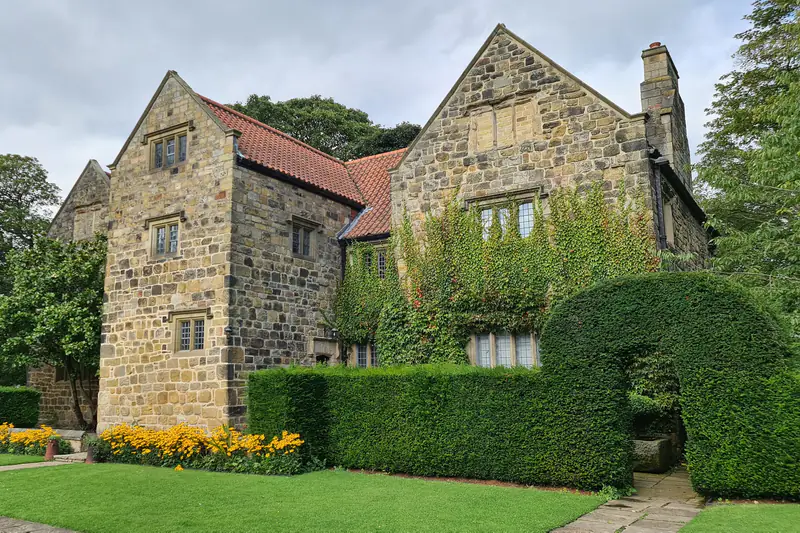
That planned layout makes Washington a practical town for solar. Most homes have straightforward pitched roofs, relatively few sit in conservation areas and scaffold access is often good. The main variable is direction. Two houses in the same close in Oxclose or Barmston can have roofs pointing south and west respectively, and the design that suits one will not suit the other.
How Village Estate Roofs Shape a Solar Design
Mixed orientations in the cul-de-sacs
A south-facing slope gives the highest annual output, but east- and west-facing roofs are far from a lost cause. An east-west split, with panels on both slopes, spreads generation across the day, which often suits households who are out at midday and home by late afternoon. The UK rule of thumb for an unshaded south-facing roof is about 900 kWh per kWp a year, with the North East in the lower-middle of the national range. East or west orientation reduces that, so we base the survey estimate on your roof rather than an average.
Concrete tiles and roof age
Many Washington homes have interlocking concrete tiles, which take standard roof hooks well when they are in sound condition. Houses from the town's early decades are now old enough that some roofs need attention, so at survey we check tile condition, battens and any signs of movement. If re-roofing is likely in the next few years, it is worth doing first. Building regulations require the roof's ability to carry the extra load to be checked, and that check forms part of every design.
Home Solar Installation Across the Villages
From Albany and Concord to Usworth and Washington Village, the domestic solar panel service follows the same pattern: your electricity use comes first, then the roof, then the system size. A typical home system of 4 to 4.5 kWp uses nine or ten modern panels, which fits on many Washington semis and detached houses without crowding the roof. If you are planning an electric car or a heat pump, say so at the start, because the design can allow for that extra demand without guessing at it.
Is a Solar Battery Worth Adding?
It depends on when you use power. A household that is out at work during the day exports much of its midday generation, and a battery can store some of that for the evening instead. Where someone is at home most of the day, the panels may already cover a large share of daytime use, and the extra cost of storage is harder to justify. North East Solar Installer looks at your usage pattern before recommending either way, and battery storage can be fitted with new panels or added to a system you already own. A standard grid-tied battery does not automatically power the house in a cut; backup has to be specified as part of the design.
From First Enquiry to Switch-On
- 1
Tell us about the property
Send your postcode, house type, roof direction if you know it and a recent electricity bill or annual usage figure.
- 2
Survey
A visit to check roof condition, shading, loading, the consumer unit and suitable positions for the inverter and any battery.
- 3
Design and itemised quotation
A system layout, a generation estimate for your roof and a quotation that lists panels, inverter, mounting, scaffolding and electrical work separately.
- 4
Connection paperwork
Most home systems are notified to Northern Powergrid under G98 within 28 days of commissioning. Larger systems, or solar plus battery above about 3.68 kW on single phase, need G99 approval first.
- 5
Installation and handover
Most homes take one to two days on site. The system is tested and commissioned, and you receive the certificates, manufacturer documents and monitoring set-up.
Commercial Solar PV on Washington's Business Estates
Washington's employment land is a large part of its character. The town sits next to the Nissan plant and the International Advanced Manufacturing Park, and estates such as Pattinson hold a mix of workshops, warehouses, trade counters and offices. Many of those businesses run through the working day, which is when commercial solar panels generate most. This part of our solar services is aimed at those small and mid-sized premises, from modern steel-clad units to older industrial roofs.
North East Solar Installer starts each commercial design with the building. Profiled metal roofs need the right fixing system and a structural check; fragile roof lights need protecting during the work; and leased units need the landlord's consent before anything is ordered. We use half-hourly data from your meter to work out how much generation the site can use on the spot. Roof-mounted PV on non-domestic buildings currently needs prior approval from the council, including a glare assessment, and larger systems usually require a G99 application to Northern Powergrid, so we build both into the programme.
Planning Permission and Sunderland City Council
Washington falls under Sunderland City Council for planning. For most of the village estates, roof-mounted panels are permitted development, provided they stay below the ridge and project no more than 200 mm from the roof slope under the rules that took effect on 27 August 2026. The older core around Washington Old Hall and Washington Village is different in character, and some properties there may sit within a conservation area or be listed. In that case, panels on a slope fronting the road may need permission and a listed building always needs consent, so we confirm the position before design work begins.
Looking After Panels You Already Have
If your roof already carries panels and generation has dropped, the inverter shows a fault or a panel has visible damage, the solar maintenance and repair service can inspect it, whoever fitted it. A report explains what has gone wrong and what a repair involves before any work goes ahead.
What Will a Washington Installation Cost?
Straightforward roofs and easy access help keep Washington installations simple, but the price still depends on system size, inverter choice, scaffolding and any battery. Solar panels and batteries fitted to homes are zero-rated for VAT until 31 March 2027, then 5% unless the relief is extended. The solar panel costs page explains the main price factors and what a quotation should include.
Ask About Solar for Your Washington Home or Unit
Tell North East Solar Installer which village or estate you are in, the type of building and roughly how much electricity you use. The reply will explain what the survey needs to cover.
Neighbouring areas have their own pages too: see solar panels in Sunderland, Gateshead and Durham. To start a Washington enquiry, use the contact page.