
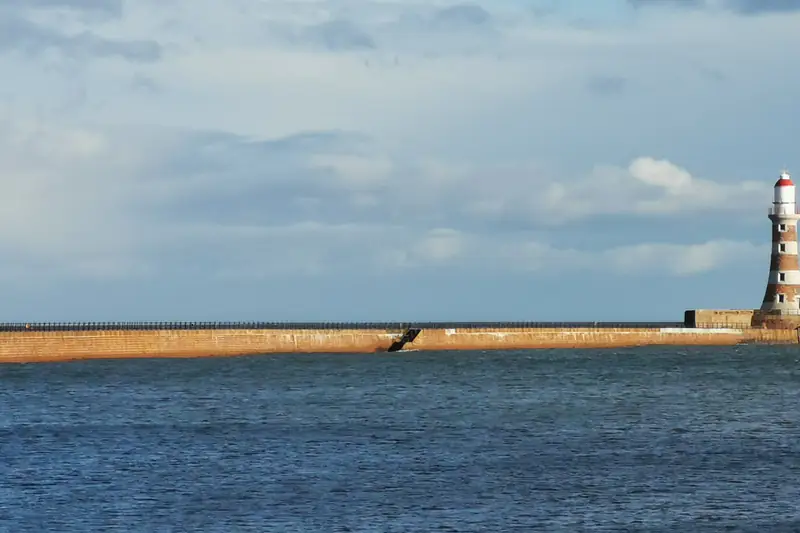
Solar Panels Near the Sea at Roker and Seaburn
Living close to the North Sea brings salt in the air and stronger gusts, and both affect how a solar system should be built. Neither rules solar out, but both change the detail: rails and fixings with suitable corrosion resistance, close attention to how the array is secured against wind uplift, and isolators and cable runs protected from the weather.
On the seafront and the streets behind it in Roker, Seaburn and Fulwell, we look closely at the condition of the existing tiles, slates and ridge, since exposed roofs can wear faster. If repairs are due, it usually makes sense to carry them out before the panels go on. Once the system is running, an occasional inspection helps catch wear on fixings early, and our solar panel maintenance and repair service covers that, for systems we fitted and for those installed by others.
Which Sunderland Homes Suit Solar Panels?
Many do, as long as the roof is sound and gets reasonable daylight. The city's housing does shape the design, though.
Sunderland Cottages
The single-storey terraced cottages found across many older parts of the city have low, compact roofs. With less space to work with, a smaller array of higher-output panels is often the answer, and low eaves can make access simpler. A modest system matched to a smaller home's demand can be the right size for that household.
Victorian Terraces in Hendon and Millfield
Older terraces typically have chimneys, rear extensions and roof coverings that may be original. We check the slates or tiles and the timbers underneath before fixing the layout, so the panels are not mounted on a roof that will need lifting soon after.
Semis and Estates from Pennywell to Farringdon
Inter-war semis and post-war estates such as Pennywell and Farringdon usually have concrete-tile roofs with straightforward shapes. Where the main slope faces a useful direction, there is often room for a 4 to 4.5 kWp array, which is roughly nine or ten modern panels and close to the typical system size the Energy Saving Trust uses. You can see what goes into sizing a household system on the domestic solar panels page.
How a Sunderland Solar Installation Works
- 1
Your enquiry
Send your postcode, property type and recent electricity use, along with roof photos if you have them.
- 2
Site survey
We assess the roof covering, structure, orientation, shading and exposure, then check the consumer unit and where an inverter or battery could sit.
- 3
Design and itemised quotation
You receive a panel layout, an equipment specification, estimated annual generation and a full cost breakdown.
- 4
Grid connection
Smaller systems are notified to Northern Powergrid after commissioning under G98. Larger ones, or those where a battery takes the total over the limit, need G99 approval first.
- 5
Installation and handover
Panels, inverter and any battery are fitted, tested and commissioned, and you receive the documents and a walk-through of the monitoring.
Commercial Solar PV for Sunderland Businesses
Sunderland's employment sites include business parks and estates such as Doxford International, Rainton Bridge, Hylton Riverside and Pallion, where offices, warehouses and production units often have large roofs, much like Team Valley in Gateshead. When a building is busy through daylight hours, the panels supply power as you need it and reduce what you buy from the grid.
Sunderland City Council aims for its own operations to be carbon neutral by 2030 and for the city as a whole by 2040. On-site generation is one practical way for a business to cut its grid demand in step with those goals. North East Solar Installer designs commercial arrays from half-hourly data and the building's structure, and handles the council's prior approval and the G99 application. See commercial solar panels for more on how projects run.
Battery Storage for New and Existing Systems
A battery stores daytime surplus for use in the evening. It suits households with high evening use and enough summer generation to fill it. On a small cottage roof with a modest array, the surplus may be too small to justify one, and we will tell you so after the survey. Existing solar can often take a retrofit battery, depending on inverter compatibility, and retrofits are zero-rated for VAT until 31 March 2027 (then 5% unless the relief is extended). Fire-safety guidance in PAS 63100 favours outdoor or outbuilding locations, which shapes where the unit goes. Read more about solar battery storage.
Request a Solar Quote in Sunderland
Tell us your postcode, the type of property and what you want the system to do. North East Solar Installer will come back with the next step.
Planning Permission in Sunderland
Sunderland City Council is the planning authority for the city, Washington included. Panels on a house roof are usually permitted development if they sit no higher than the highest part of the roof (excluding the chimney) and project no more than 200 mm. Conservation areas add restrictions on walls fronting a highway and on flat-roof systems, and listed buildings need consent. We raise any of these points at survey, before you commit to anything.
Solar Panel Costs in Sunderland
The final figure depends on panel numbers, roof access, the inverter, any battery and any repairs needed first. A seafront property may need specific fixings, and a commercial roof may need a structural assessment. The Energy Saving Trust put a typical 4.5 kWp home system at about £7,600 in September 2026 and estimated it could take £190 to £330 a year off bills before export income. Your own figures depend on usage, tariff and system design. Our solar panel costs page explains how quotations are built up.
Areas Covered Around Sunderland
We install across Roker, Seaburn, Fulwell, Southwick, Hendon, Millfield, Pallion, Grangetown and Ryhope, and addresses in Houghton-le-Spring and Hetton-le-Hole can be checked by postcode. Nearby, see solar panels in Washington, South Shields and Durham. Get in touch with your postcode to arrange a survey.