
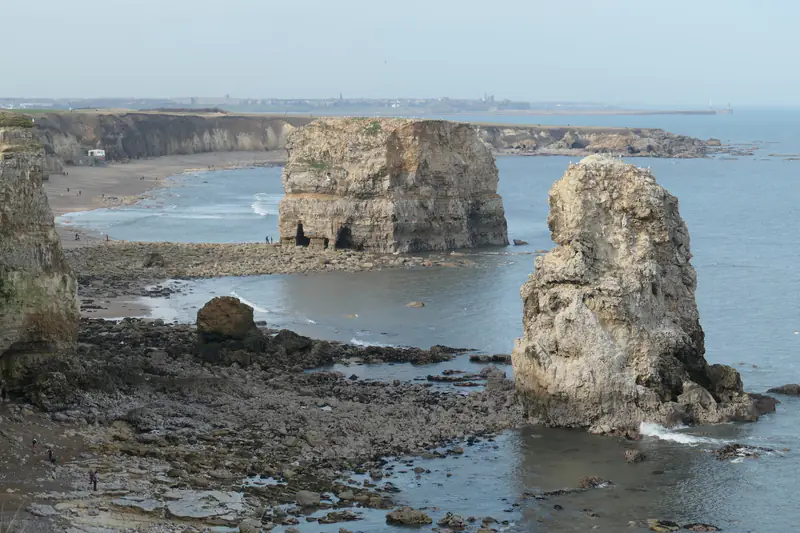
South Shields asks more of a solar installation than most inland towns. Roofs near Sandhaven and Marsden take the full force of onshore winds and sea spray, while the older streets behind the seafront bring shared roofs, chimney stacks and tight access along back lanes. Getting those details right at survey stage keeps an array producing for decades instead of turning into a maintenance job after a few winters.
Solar Services Available in South Shields
North East Solar Installer covers four areas of work in the town, and many projects combine more than one of them.
Domestic solar panel installation
For homeowners, the job starts with a survey of the roof, the consumer unit and how your household uses electricity, followed by a system design and an itemised quotation. You can read how the service works on the domestic solar panels page.
Commercial solar PV
Workshops, warehouses and offices around the Port of Tyne, Boldon Business Park and Monkton often use most of their electricity during working hours, which is when panels generate. That daytime match is the starting point for a commercial solar PV proposal.
Battery storage
A battery can be designed in from the start or added to panels you already own, so that more of your daytime generation is available in the evening. See the solar battery storage service for how capacity and compatibility are assessed.
Maintenance and repairs
Coastal systems benefit from regular checks. Inspections, fault-finding and solar panel repairs are available for existing installations, including systems fitted by other companies, subject to an inspection first.
Seafront Roofs: Planning for Salt Air and Wind Load
On streets that face the sea, the mounting system deserves as much attention as the panels. Rails, clamps, roof hooks and cable fixings need to be suited to a salt-laden atmosphere, because ordinary fixings can corrode faster on an exposed coastline. Wind loading also affects where panels can sit: arrays are usually kept back from roof edges and ridges, where uplift is strongest, and the fixing pattern is chosen to suit the exposure of the site.
Salt film can build up on the glass, and gulls are familiar visitors on seafront roofs. Both are discussed at design stage, along with access for future cleaning and inspection.
Terraces, Tyneside Flats and Westoe Villas
Much of the town's older housing was built tightly together, which shapes what fits on the roof.
Victorian terraces in Laygate and Westoe
Many terraced houses have a main roof facing the street and a smaller rear section over the back offshoot. The rear offshoot roof is often too narrow for a useful array, so the main slopes usually carry the panels. Chimney stacks, party walls and scaffolding in a narrow back lane all feed into the design and the price.
Who decides about a Tyneside flat roof?
A Tyneside flat shares one building, and usually one roof, between an upstairs and a downstairs home. Before any design work, it helps to confirm who owns or controls the roof under the deeds or lease, whether the other owner needs to agree, and which flat's supply the system will connect to. The planning position for flats can differ from that for houses, so it is checked as part of the survey.
Villas in the Westoe conservation area
If your home sits within the Westoe conservation area or any other protected area, panels on a wall or roof slope facing the road may need planning permission, and a listed building needs listed building consent. Rear slopes are often the simpler option. If an application is needed, South Tyneside Council is the planning authority, and North East Solar Installer checks the position for your address at survey stage.
Inter-War and Post-War Estates in Harton, Cleadon Park and Biddick Hall
Semi-detached houses around Harton and Cleadon Park, and the post-war homes of Biddick Hall and Whiteleas, typically offer clearer, more regular roof slopes than the terraced streets nearer the river. Hipped roofs reduce the usable area, though, and an east and west split can work well where neither slope faces south.
Thinking about panels for a South Shields property?
Send your postcode, a short description of the roof and a rough idea of your annual electricity use, and the next step can be arranged.
How Much Electricity Can Panels Generate Here?
An unshaded, south-facing array in the UK produces roughly 900 kWh per kWp each year, and the North East towns we cover sit in the lower-middle of the national range. Around 70% of annual output tends to arrive between March and August, with the darkest months producing far less. A realistic estimate for your home uses your own roof direction, pitch and shading rather than a regional average, and it is shown in your quotation.
If most of your electricity is used in the evening, a battery may help. Current fire-safety guidance for home batteries favours an outdoor position or an outbuilding over a loft, which can take some planning on a terraced street with a small yard, so we agree the location with you early.
From First Enquiry to a Working System
- 1
Tell us about the property
Your postcode, the type of house or flat, any shading and recent electricity bills give enough detail to judge whether a survey is worthwhile.
- 2
Survey
The roof, its condition and exposure, the electrical installation and safe access are checked on site.
- 3
Design and itemised quotation
You receive a layout, a generation estimate and a quotation listing panels, inverter, mounting system, scaffolding and any battery separately.
- 4
Installation and grid connection
Most home systems connect under G98 and Northern Powergrid is notified within 28 days. Larger systems, including some with batteries, need a G99 application and approval before connection.
- 5
Commissioning and handover
The system is tested and commissioned, and you receive the handover documents and a walk-through of the monitoring.
What Does Solar Cost in South Shields?
The Energy Saving Trust estimated in September 2026 that a typical 4.5 kWp home system costs about £7,600. Your price depends on the number of panels, the roof, scaffolding and any battery. Restricted access on terraced streets can add to scaffolding costs. Installation of panels and batteries on homes currently carries 0% VAT until 31 March 2027, then 5% unless the relief is extended. The solar panel costs guide explains what each part of a quotation covers.
Covering South Shields and the Surrounding Area
Enquiries are welcome from Westoe, Harton, Marsden, Simonside, Cleadon and the town centre, as well as Jarrow, Hebburn and Boldon. Across the river, the North Shields solar page covers the other side of the Tyne mouth, and there are separate pages for Sunderland and Gateshead.
To arrange a survey or ask about an existing system, contact North East Solar Installer with your address and a few details about the roof.